
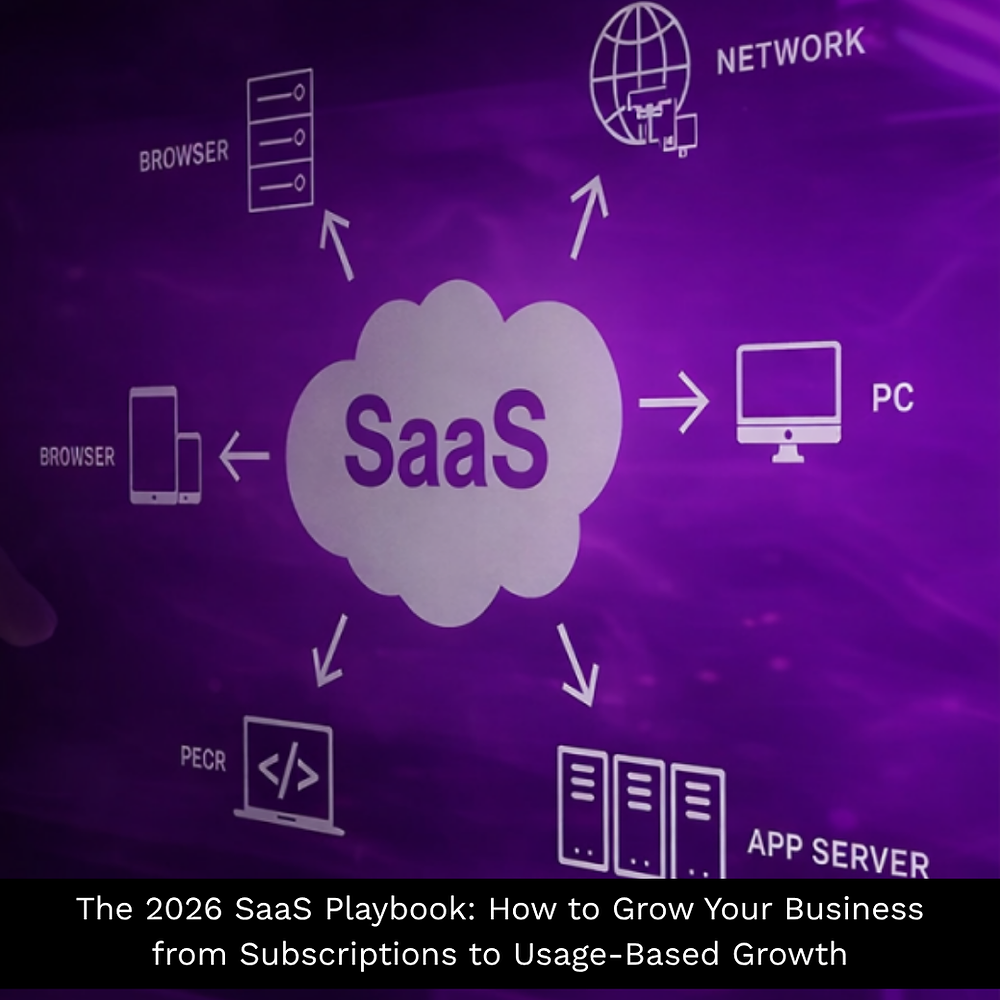
Not so long ago, a “software” product implied an unwieldy box from a retail store full of a CD-ROM and extensive documentation. Nowadays, the previous concept seems like something from the Stone Age. And we are witnesses of a new era – the Software as a Service (SaaS). The SaaS has completely redefined how tech products are created, marketed, and utilized by customers.
Now, when we speak about 2026, the SaaS industry has evolved. There is more than being “in the cloud”. In order to succeed, companies should have a profound understanding of the peculiarities of the subscription economy and be focused on customer success rather than a one-time deal.
What is the SaaS Business Model About?
The definition of the SaaS business model lies in software distribution based on hosting apps provided by vendors over the internet. This means that customers have a subscription to a product instead of buying it once.
Such a business model involves an interesting shift. Namely, now the responsibility for updates, security, and maintenance belongs to the vendor side.
Three Pillars of SaaS Success
In 2026, the most successful SaaS startups will not only sell products but also deliver value. The success of the top players depends on three key pillars:
-
Predictable Recurring Revenue
For SaaS providers, Monthly Recurring Revenue (MRR) is the Holy Grail. Instead of beginning anew each month, SaaS creates a compound interest effect. If your Churn Rate (the percentage of clients who abandon their accounts) remains low, your revenues grow exponentially from the moment you get a new customer.
-
Unlimited Scalability
From its inception, SaaS has been international by nature. Since your software is hosted online, it doesn’t matter whether your client is next door or on the other side of the globe. In 2026, Vertical SaaS has emerged as a powerful trend, allowing small companies to tailor solutions for niche industries like boutique fitness studios or solar panel installation. You no longer need to be everything to everybody to scale.
-
Continuous Delivery & Innovation
Forget about waiting another two years for “Version 2.0.” SaaS updates happen in real-time, and that is where the magic happens. Customer feedback shapes product development instantly. Unpopular features are immediately scrapped, and bugs are fixed overnight.
Price in 2026: The Move to Value Pricing
We are now beyond the “one price fits all” approach. These days, the leading-edge companies implement multiple approaches that try to make sure that the price paid reflects the value received by the consumer.
Companies either rely on the Usage-Based Pricing, where people will be charged for what they use. Or use the old tried-and-true Tiered Pricing offering different packages (“good, better, best”) to various customer categories. Or introduce Per-Seat Pricing in collaboration solutions that scale depending on team size. Or apply Outcome-Based Pricing and bill clients according to achieved outcomes such as leads generated.
The Future: Agentic SaaS and AI
What defines the year 2026? It’s the use of Agentic AI. Companies are no longer building applications where “human-in-the-loop” does the work; rather, they are building software first.
For instance, the advanced SaaS CRM does not just remind you about emailing the prospect but actually drafts an email based on your previous conversations, suggests the right time for sending it and updates your pipeline automatically. This way, the application becomes “sticky,” and not just another browser tab that is used occasionally.
Price in 2026: The Move to Value Pricing
We are now beyond the “one price fits all” approach. These days, the leading-edge companies implement multiple approaches that try to make sure that the price paid reflects the value received by the consumer.
Companies either rely on the Usage-Based Pricing, where people will be charged for what they use. Or use the old tried-and-true Tiered Pricing offering different packages (“good, better, best”) to various customer categories. Or introduce Per-Seat Pricing in collaboration solutions that scale depending on team size. Or apply Outcome-Based Pricing and bill clients according to achieved outcomes such as leads generated.
The Future: Agentic SaaS and AI
What defines the year 2026? It’s the use of Agentic AI. Companies are no longer building applications where “human-in-the-loop” does the work; rather, they are building software first.
For instance, the advanced SaaS CRM does not just remind you about emailing the prospect but actually drafts an email based on your previous conversations, suggests the right time for sending it and updates your pipeline automatically. This way, the application becomes “sticky,” and not just another browser tab that is used occasionally.
Conclusion
As a result, the SaaS business model has come a long way from a mere cloud-based solution into the very fabric of the global economy. By exchanging ownership for access, this type of software solution makes technology affordable and scalable while offering a highly predictable platform for developers. Yet, as SaaS becomes saturated by 2026, the key to success is not simply access but impact.
In order to succeed in the following decade, software solutions based on the SaaS business model will have to go one step further. No longer limited to merely providing access, these solutions will be expected to partner with customers, using AI technologies, flexible pricing policies, and specialization in certain industries. While the box and manual may be gone, the essence is the same.
